
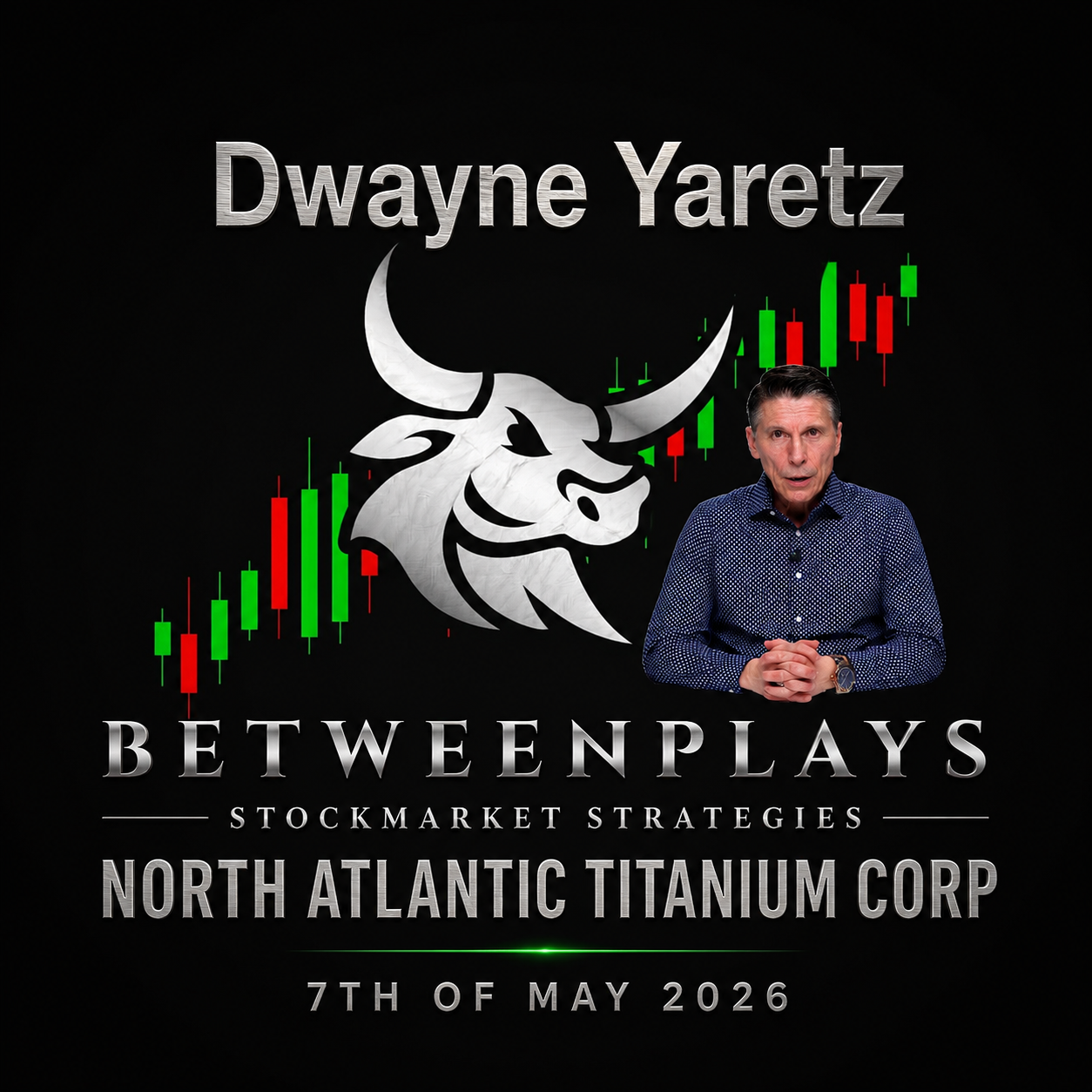

Betweenplays has established a contract with North Atlantic Titanium Corp.
Dwayne Yaretz on North Atlantic Titanium, Critical Minerals, De-Risking & Building a Titanium Future
North Atlantic Titanium Corp. (CSE: NATO | OTCPK: NATQ.F | FSE: Y33)
Betweenplays sits down once again with Dwayne Yaretz, CEO of North Atlantic Titanium Corp. (CSE: NATO | OTCPK: NATQ.F | FSE: Y33), for a deeper follow-up interview focused on the Everett Titanium Project in Québec and the growing importance of Critical Minerals within the evolving Western supply chain.
While the first interview introduced viewers to the larger macro story surrounding titanium, reshoring, defense metals, and North Atlantic Titanium’s strategic vision, this second conversation slows the process down and examines the actual building blocks behind the project itself.
The discussion explores how Everett remains in the earlier stages of advancement under an option earn-in structure, where North Atlantic Titanium may increase its ownership interest in the project over time through staged work commitments, exploration expenditures, and technical advancement. The interview takes viewers inside the process of what it truly means to advance a large-scale Critical Minerals project from historical groundwork toward modern technical validation.
A major focus of the conversation centers around the company’s recently announced field mobilization program at Everett, including surface sampling, metallurgical work, technical analysis, and preparation for future drilling and resource definition. The interview breaks down how these early-stage programs are designed not only to better understand the geology of the project, but also the mineralogical and metallurgical characteristics that may ultimately determine its future economic potential.
The conversation also examines why metallurgy is becoming such an important part of the Everett story. Rather than simply discussing tonnes and grades, the interview explores the significance of where titanium, vanadium, iron, and phosphate are hosted within the rock itself, and why understanding mineral liberation and processing characteristics may become critical in evaluating the project long term.
Viewers are also taken deeper into the distinction between historical mineralization data and what eventually becomes a modern NI 43-101 compliant mineral resource estimate. The widely referenced historical 234-million-tonne figure associated with Everett is discussed in context, helping newer investors better understand the difference between historical exploration work and modern regulatory-compliant resource reporting standards used in today’s mining industry.
Another important aspect of the interview focuses on geography and infrastructure. Everett’s location only a few kilometers from Rio Tinto’s Lac Tio operation places the project within one of the world’s most important titanium districts. The discussion explores why proximity to existing infrastructure, roads, hydroelectric power, and deep-water port access may become strategically important as Western nations continue evaluating domestic and allied Critical Minerals supply chains.
The broader geopolitical importance of titanium is also explored throughout the conversation. Titanium remains a key material used across aerospace, defense, industrial manufacturing, pigments, energy systems, and advanced technologies. As governments increasingly focus on reshoring strategic mineral supply chains away from geopolitical rivals, projects such as Everett are beginning to attract greater attention within the broader Critical Minerals narrative.
The interview ultimately provides viewers with a more grounded and detailed look at how a public exploration company advances a project step by step — from option agreements and early-stage field programs to metallurgy, technical reporting, drilling, and eventual resource definition — while helping viewers better understand the realities, timelines, and complexity involved in building a modern Critical Minerals project in North America.
⚠️ Disclaimer
Betweenplays and its affiliates are not financial advisors. This interview is for informational and entertainment purposes only and should not be construed as financial or investment advice. The time of posting this content Betweenplays has established a contract with North Atlantic Titanium Corp. Always conduct your own due diligence and consult a licensed financial professional before making investment decisions.
